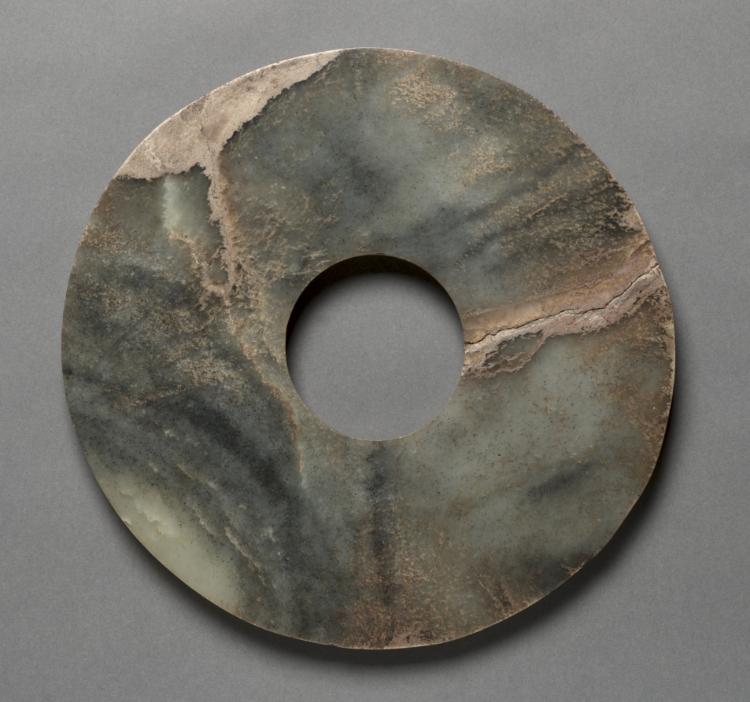
AT A GLANCE
A careful visual inspection can reveal useful questions about a jade object, but it cannot settle every claim about identity, treatment, origin, or age. This guide explains how to describe observations without overinterpreting them, organize a sensible examination, and decide when professional testing is appropriate. It also considers photographs, seller demonstrations, report matching, and the information worth keeping after a purchase.
Observation is a useful skill with boundaries
Looking closely at an object is worthwhile even when you cannot identify it conclusively. You may notice a chipped edge, an uneven mounting, a surface mark, or a difference between the object and its listing. Those observations can support practical decisions. The problem begins when an observation is promoted into a technical conclusion it cannot support. A green stone may look like the jade you have seen elsewhere, but similarity alone does not resolve its mineral identity or treatment status.
Treat visual inspection as a way of generating questions. Describe what you see in ordinary language: a pale area near the hole, a narrow line crossing the back, a glossy surface with a dull patch. These descriptions are more useful than immediately naming a fracture, dye concentration, or repair without sufficient evidence. They can be shared with the seller or a qualified examiner, who can consider them alongside measurements, appropriate instruments, and the object's full construction.
Start with the claim you need to evaluate
Before choosing any test or paying for an examination, write down the claim that matters. Material identification is one question. Treatment detection is another. Geographical origin, historical age, authorship, condition, and value can require different kinds of evidence. The fact that one question has been answered does not mean the others have been resolved. A document identifying a material should not quietly become proof of a story about who carved it a century ago.
This step also helps you choose the right professional. A gemological laboratory, a jewelry repair specialist, and a specialist in historical decorative arts may offer different services. Ask about scope before submitting the object. Explain the decision you are trying to make rather than requesting an undefined certificate. A precise question makes it easier to understand whether a proposed examination is relevant and what limitations will remain after the work is complete.
Record the object before interpreting it
Make a basic record with overall photographs, dimensions, weight if safely obtainable, visible fittings, and any existing documentation. Use a clean, soft surface and handle the object gently. Photograph the front, reverse, sides, and attachment points where accessible. Include a scale in at least one image, and keep an unedited copy. This record can help distinguish the actual object from similar pieces and can be useful when requesting an examination or discussing condition.
Keep the notes descriptive. Instead of writing that a pendant has a repaired crack, write that a line is visible across a specified area unless the repair has been established. Note whether a feature appears on one surface or continues around an edge. If a piece is mounted, say which areas are hidden. This modest discipline prevents an early assumption from being repeated later as if it were an independent finding.
Color is not a complete identification method
The broad idea of jade is often reduced to green in casual conversation, but a familiar color does not establish identity. Many materials can occupy similar parts of the color spectrum, and an individual piece can display several tones. Conversely, a stone need not match a stereotypical green to be described as jade. A color observation is useful for communicating appearance; it is not a complete mineralogical analysis.
Be particularly careful with color names that sound technical but are used commercially. A seller may use a poetic term consistently within a collection without that term corresponding to a standardized laboratory finding. Ask for the underlying material name and any treatment information separately. You can still decide that the color is beautiful. Appreciating it does not require accepting an unsupported conclusion about what caused it, where it came from, or how rare it must be.
Texture in a photograph can mislead
Close-up images sometimes appear to show grain, fibers, tiny pits, or a smooth internal glow. These details can be affected by focus, sharpening, reflections, compression, surface polish, and the direction of light. A screen image is therefore an imperfect record of both surface and interior. It can help identify areas for further examination, but interpreting a photographed texture as a definitive material signature requires more than a striking enlargement.
Ask for views under different ordinary lighting conditions if appearance matters to your decision. A diffuse-light image can complement a more dramatic one. A short video may show how reflections move, but it does not remove the limitations of remote viewing. Avoid building an elaborate diagnosis from a single pixelated image. The practical benefit of additional views is often simpler: they help you judge whether the object looks appealing in more than one carefully arranged setting.
A bright light answers only certain questions
Passing light through a thin area can reveal differences in how an object transmits light. It does not automatically establish that the material is jade, untreated, or unusually valuable. Thickness, structure, color distribution, and lighting geometry all influence the effect. A flashlight held close to a pendant can make a small area look dramatically different from the same pendant in ordinary wear. Neither view should be mistaken for the whole experience.
If a seller uses a light demonstration, ask what the demonstration is intended to show. A responsible answer might be that it helps display the distribution of translucency. An unsupported answer would turn the visual effect into an all-purpose authenticity guarantee. Keep the demonstrated observation and the claimed conclusion separate. You do not need to reject every attractive lighting image; you need to avoid allowing the image to answer questions that were never actually examined.
Handling impressions are not laboratory findings
Coolness, smoothness, and apparent weight contribute to the tactile pleasure of jewelry. They can also be influenced by room temperature, object size, thickness, finish, and the materials used in a mounting. Without controlled conditions and suitable interpretation, these sensations should not be treated as conclusive identification methods. A person can become familiar with how a favorite object feels without acquiring an ability to authenticate every similar-looking object by touch.
The same caution applies to demonstrations involving sound. A ring or click can be affected by shape, dimensions, support, and impact. Deliberately striking jewelry also introduces a risk of damage. Do not use a memorable sound as a substitute for material disclosure or appropriate examination. If a seller relies heavily on such a performance, return to the specific claim: what is the material said to be, and what evidence supports that statement?
Avoid tests that change the object
Scratching, heating, soaking in chemicals, applying solvents, or rubbing with abrasive material can damage a piece and may interfere with later examination. A result can be difficult to interpret even when the experiment appears simple. The object may include stone, coatings, adhesive, metal, thread, or earlier repairs, and a reaction in one component does not necessarily identify the rest. A destructive experiment can therefore create damage without supplying a reliable answer.
Preserve the object as received, especially while a return period or a formal assessment is pending. If you suspect a problem, photograph the concern and contact the seller or a suitable professional. Do not attempt to expose a supposedly hidden natural surface by removing a finish. You may erase evidence that would have been useful. A cautious examination strategy aims to obtain information while leaving the object intact, rather than treating damage as a necessary stage of learning.
Understand mounted and assembled pieces
A pendant's mounting can hide edges or the reverse. A bracelet can combine multiple beads, spacers, cords, and fittings. The information available from one visible area may not describe every component. When an examination is proposed, ask whether the construction limits the findings and whether any disassembly would be needed. Do not authorize alterations casually if the item is still under consideration for return or if its historical construction matters.
For strands and sets, clarify the examined unit. A document may concern an individual stone, a sample, or a complete submitted item. Those are different scopes. If all beads look similar, that visual consistency does not necessarily establish that every component has the same identity and treatment history. Ask the seller to explain the connection between the document and the assembled piece. The answer should be understandable without assuming that appearance alone supplies the missing evidence.
Read a report as a bounded statement
An identification report should be read for its actual findings, date, item description, and any qualifications. Consult the issuer's explanations of its terminology when needed. Do not translate a phrase into a broader promise merely because it sounds reassuring. For example, a report can address an examined material without guaranteeing the seller's geographic narrative, the age of a carving, or the amount someone might pay for it in the future.
Match the report to the object through the details available, such as photographs, dimensions, weight, and identifying numbers. Use the issuer's official verification route where offered, and check that the retrieved information agrees with the document. Verification of a report record is useful, but you still need to consider whether the object in hand is the object described. Keep the document and the item photographs together so that this relationship remains clear after the transaction.
Condition requires its own attention
Material identity does not replace a condition assessment. A piece can be correctly described as a particular material and still have a damaged opening, unstable fitting, heavily abraded surface, or previous repair. Decide which condition questions matter for the intended use. A pendant worn occasionally may present different practical concerns from a bangle expected to accompany daily activity. Ask about those concerns directly rather than assuming that a favorable identification finding covers them.
Look at high-contact areas: the edge of a bangle, a drilled suspension hole, the junction between stone and metal, or the points where cord rubs against a bead. Describe visible marks without guessing their cause. A professional may need to examine them in person to assess significance. Do not push, bend, tap, or scrape an uncertain area to find out whether it is sound. Observation should reduce uncertainty without creating an additional condition problem.
Choose an examination proportionate to the decision
The appropriate level of investigation depends on why you need the answer. A modest decorative purchase, a significant acquisition, an inherited object with family history, and an item being considered for repair can present different priorities. Ask what the proposed examination will cost, how the object will be handled, what findings will be provided, and which questions will remain outside the service. A clear scope prevents disappointment after the fact.
Do not choose solely on the promise of the most reassuring conclusion. Seek an examiner who explains limitations and is willing to distinguish established findings from uncertainty. If two opinions differ, compare their methods, scope, and the exact objects or components examined before assuming that one must be dishonest. Sometimes the disagreement arises because the questions were different. A useful professional relationship makes those distinctions visible and gives you a record you can understand later.
Preserve uncertainty honestly
An object may remain partly unexplained even after careful examination. Its material could be identified while its earlier ownership, original mounting, or precise carving date remains unknown. That is a legitimate state of knowledge. Avoid filling the gaps with a story merely because the story makes the piece feel more special. A personal association can be meaningful without being presented as documented history, and a beautiful object does not need every question resolved to be enjoyed.
Keep notes that distinguish family recollection, seller statements, laboratory findings, and your own observations. If new information appears, add it with a date rather than silently rewriting the past. This approach makes the record more useful for future care and for anyone who later receives the piece. The central skill is not pretending to see everything at a glance. It is knowing which observations are helpful, which conclusions need more evidence, and when a careful question is the most reliable next step.
Keep the questions in order
A useful inspection worksheet can contain four columns: the claim being made, the evidence supplied, the question still open, and the next appropriate step. For example, a seller may provide a material description but no treatment statement. The next step is to request the missing disclosure, not to invent a color test that appears to answer it. Another object may have a relevant report but an uncertain suspension fitting; that question belongs with a condition or repair assessment.
This order keeps a purchasing conversation efficient. You need not solve every possible historical question before buying a simple pendant, but you should understand the questions on which your own decision depends. Marking an item as unresolved is a valid outcome. If the missing answer is essential, wait or choose another object. If it is not essential, preserve the uncertainty in your records. The discipline is transferable to many natural-material accessories: ask exactly what is claimed, seek evidence that addresses that claim, and resist the temptation to let an attractive impression do the work of a different kind of examination.
References & further reading
References provide background and further reading. Linked organizations do not endorse or certify this publication.
For general education. The identity, treatments, construction, and condition of an individual object may require professional examination. Our editorial approach.
Back to the beginning