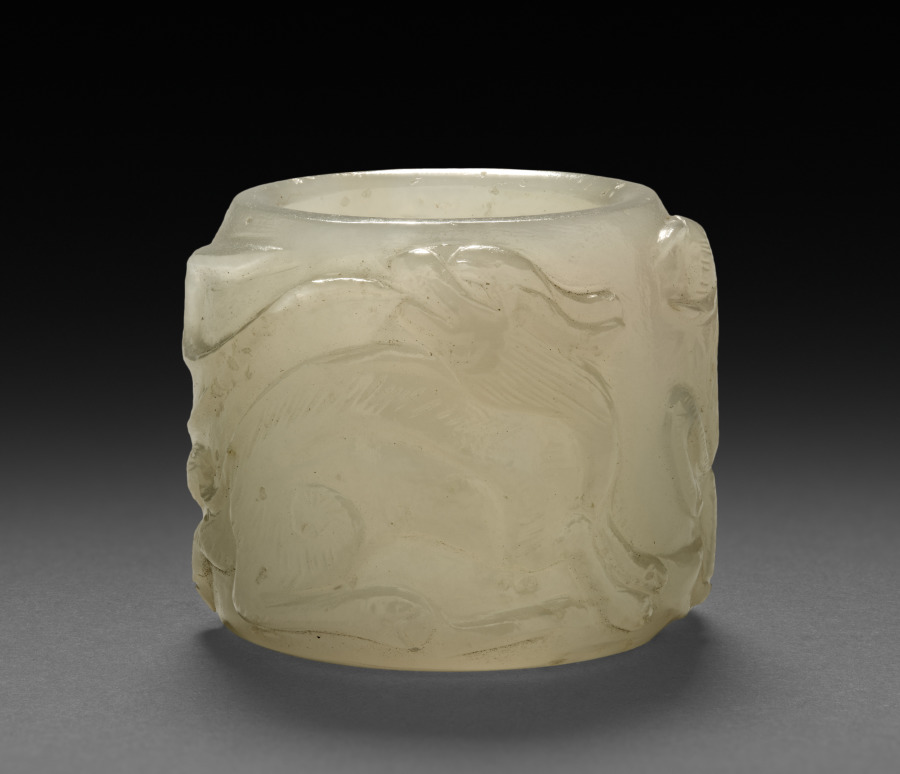
AT A GLANCE
An heirloom record can preserve both family meaning and factual uncertainty. This guide shows how to photograph a jade object, collect documents, record recollections, distinguish sources, and document repairs without inventing an authoritative history. It also offers practical ways to organize digital and paper files so that a future recipient can understand what is known, what is remembered, and what remains unresolved.
Begin with what the family actually knows
An inherited jade piece may arrive with a precise story, a few fragments of memory, or almost no information at all. Start by recording those circumstances honestly. Who passed it to you? When did you receive it? What was said at the time? A modest but accurate account is more useful than a polished narrative that fills every gap. The goal is to preserve the information available, not to make the object sound older, rarer, or more important than the evidence supports.
Write the first account before researching similar objects online. Otherwise, outside descriptions can quietly influence what you think you remember. Use phrases that identify the source: a relative recalled, a note states, or the receipt describes. If nobody knows when the piece entered the family, say so. Uncertainty is not a failure in an heirloom record. It is information that helps future readers distinguish an established fact from a possibility they might later investigate.
Give the object a simple identifier
Choose a short identifier that you can use consistently across photographs, documents, and notes. It does not need to be elaborate: a family collection name and a sequence number can be enough. Keep the identifier on a tag or storage record rather than applying an unfamiliar adhesive or ink to the object itself. The purpose is to prevent a photograph or report from becoming separated from the piece it describes, especially if the family owns several similar accessories.
Add a brief neutral description, such as a round green bangle or a pale carved pendant on a dark cord. Avoid embedding uncertain technical claims in the identifier. If the material has not been professionally identified, the record can say that the family calls it jade while keeping the exact identification open. An identifier should remain useful even if later examination changes your understanding. Stable organization is easier when the filing system does not depend on a conclusion that may be revised.
Photograph the complete object
Make overall photographs before concentrating on details. Include the front, reverse, sides, attachment points, and any inscriptions. For a bangle, photograph more than one section of its circumference. For a bead strand, show the full arrangement and the clasp or knot area. Work over a soft surface and avoid handling techniques that could place stress on a delicate fitting. A clear record should not require risky posing or a dramatic display.
Include a ruler in one or more images and record whether measurements refer to the stone or the complete mounted piece. Keep the unedited originals. You can make cropped copies for convenience, but preserve the initial files so that a later reader can understand the context. Photograph existing packaging and labels separately. A box may be associated with the object, but unless the connection is documented, do not assume that it was supplied with the piece when originally purchased.
Record measurements in a consistent way
Measurements help distinguish an object from similar pieces, but they should be taken gently and described clearly. For a pendant, separate the stone's dimensions from the overall height including the bail where possible. For a bangle, record the inner opening and note whether it is round or oval. If weighing is appropriate and you have a suitable scale, state whether the result includes cord, chain, or other components. Avoid removing fittings merely to obtain a more specialized measurement.
Record the date and method rather than pretending to greater precision than your tools provide. A household measurement can still be useful if its limitations are clear. If a professional document supplies a different value, retain both and investigate whether the difference reflects rounding, equipment, mounting, or an actual alteration. The aim is an understandable object record, not a list of unexplained numbers. A future recipient should be able to tell what was measured and why two entries may not match exactly.
Collect the paper trail without rearranging its meaning
Gather receipts, correspondence, laboratory reports, appraisals, insurance-related documents, repair notes, old photographs, and any earlier inventory entries. Scan or photograph each item and keep the originals in an appropriate separate file. Label what the document is and who created it. A shop card, a family note, and an independent laboratory report do not carry the same kind of information, even when they all refer to the same object.
Keep envelopes and associated notes if they explain dates or relationships, but avoid assuming that everything found in the same drawer belongs together. Record the association as found. For example, a pendant and an old receipt were stored in one box, but the receipt cannot yet be matched conclusively to that pendant. This careful wording preserves a useful lead without overstating it. Later research may establish the connection; until then, the record should leave the question visible.
Interview relatives with open questions
If relatives have relevant memories, ask them to describe what they remember before presenting a proposed history. Questions about who wore the piece, when they first saw it, or whether they recall a repair can produce more useful information than asking them to confirm that it came from a particular place. Let different accounts stand separately when they differ. Memory can preserve meaningful details while remaining uncertain about dates or sequences.
Record the speaker, the date of the conversation, and whether the account was written, recorded with permission, or summarized from notes. Quote only what is needed and distinguish exact wording from your paraphrase. Ask whether there are photographs, letters, or other objects that might help place the memory in context. Do not turn a repeated family story into several independent sources simply because several people learned it from the same person. The relationship between accounts is part of the evidence.
Separate personal meaning from technical identification
A piece can be deeply meaningful even if its exact material, treatment history, or geographical origin is unresolved. Preserve the family association in its own section rather than making it depend on a technical conclusion. A pendant worn by a parent at important events has a documented personal role if photographs or memories support that role. It does not need an invented claim about exceptional rarity to deserve careful attention.
If identification would help with care or another practical decision, consult a suitable professional and explain the question you want answered. Keep the resulting report in the file and read its scope carefully. A material finding may add useful information without verifying a family's story about purchase location or age. The record becomes stronger when these different forms of knowledge coexist clearly, rather than when one is made to appear as proof of all the others.
Treat historical attributions cautiously
Online photographs of similar motifs can suggest research directions, but resemblance alone does not date a carving or name its maker. Designs can be repeated, adapted, and revived. A piece may also combine components from different periods. If age or authorship matters, seek advice from an appropriate specialist and ask what evidence supports the opinion. Keep the opinion's date, author, and qualifications about uncertainty with the rest of the record.
Avoid rewriting the file around the most flattering attribution you encounter. A cautious opinion can be more useful than a confident story unsupported by examination. If later research changes the understanding, preserve the earlier account and add the revision with an explanation. The history of how an object was understood can itself be informative. An honest record does not need to erase every mistaken belief; it needs to distinguish past belief from current evidence.
Document condition before intervention
Photograph visible marks, worn areas, damaged fittings, and existing repairs before authorizing work. Describe the concern without making a diagnosis you cannot support. A line crossing a pendant should be recorded as a visible line unless its nature has been established. Note any limitations, such as an area hidden by a mounting. This baseline helps a professional understand what you noticed and helps later readers recognize what changed during treatment or repair.
Ask the professional to describe the proposed work and its intended result. Cleaning, restringing, remounting, surface refinishing, and structural repair are different interventions. Record the date, provider, materials used where documented, and any components replaced. Keep removed components if appropriate and safe. A family object does not lose all meaning because it needs maintenance, but the work should be visible in the record rather than silently absorbed into an inaccurate story of untouched originality.
Create a timeline with levels of confidence
A timeline can be useful if it does not force every entry into the same level of certainty. Mark dates as exact, approximate, or based on recollection. A dated photograph may establish that the piece was in a person's possession by that time; it may not establish when it was acquired. A receipt may record a purchase but still require a clear match to the object. Explain what each entry actually supports.
Leave gaps where the evidence leaves gaps. Do not interpolate a continuous ownership chain simply because the object is now in the family. If a period is unknown, label it unknown. This makes later additions easier and prevents the timeline from becoming an authoritative-looking fiction. A short chronology with transparent sources is more valuable than a detailed one built from assumptions. Its usefulness lies in showing both the sequence and the limits of what can presently be established.
Organize digital files for a future reader
Use a simple folder structure with separate areas for photographs, documents, correspondence, and a summary record. Name files consistently with the object identifier and a date where known. Avoid filenames that depend on a disputed attribution. Keep at least one backup in a location separate from the primary copy, and use file formats that are likely to remain accessible. A beautifully written record is of little use if nobody can locate the associated images.
Add a short index explaining what each document is and where the original is stored. Do not rely on software tags alone, since they may be lost when files are transferred. If private information appears in receipts or correspondence, maintain an appropriate private copy and consider a redacted version for wider sharing. The object record should be easy to pass on without unnecessarily exposing addresses, account details, or unrelated family information that happens to appear on a scanned page.
Prepare a plain-language handover note
Write a concise note for the person who may eventually receive the piece. Explain how it came to you, what is known about it, where the documents are, and what care or maintenance information matters. State unresolved questions plainly. A future recipient should not have to reconstruct the difference between a family recollection and a laboratory finding from scattered documents. The summary is a guide to the evidence, not a replacement for it.
Include practical details such as the storage location, the identity of any repair professional who has worked on the piece, and the date of the latest inspection or restringing. If there are wearing restrictions or known condition concerns, put them where they will be seen. Do not use the handover note to promise future financial value. Its purpose is to preserve understanding and support responsible ownership, which is a different and more durable task than forecasting what a later market may do.
Allow the record to remain alive
An heirloom file is not finished forever after one afternoon of organization. Add information when a new photograph appears, a relative recalls a useful detail, or maintenance occurs. Keep a dated revision note so that changes can be understood. This does not require constant research. A brief update when something relevant happens is enough to prevent the record from becoming disconnected from the actual object and its life within the family.
The most valuable result is often a modest combination of clear photographs, accurate documents, attributed memories, and visible uncertainty. It allows the piece to carry personal meaning without requiring factual exaggeration. A future recipient can appreciate the stone, the design, and the family connection while knowing which claims have support. That is a generous form of care: not simply preserving an object, but preserving an honest way to understand it.
Write down the naming choices
If the family uses a nickname for the piece, include it alongside the neutral object description. A name such as grandmother's green pendant can help relatives recognize the item even when the formal identifier means little to them. Explain whose grandmother is meant and which generation used the name. These small details can become unexpectedly ambiguous over time. Keep the familiar name as an aid to recognition while preserving accurate descriptions and attributed history in the main record. The combination makes the file accessible to family members without asking an affectionate label to establish technical facts.
References & further reading
References provide background and further reading. Linked organizations do not endorse or certify this publication.
For general education. The identity, treatments, construction, and condition of an individual object may require professional examination. Our editorial approach.
Back to the beginning