AT A GLANCE
A rose quartz ring, a knotted necklace, and a carved pendant do not share every care requirement. Explore how settings, holes, stringing, finishes, and delicate shapes change the practical routine around the same named material. This guide helps you read instructions for the complete object, recognize changes worth checking, and plan storage and repair without relying on a universal cleaning shortcut.
The mineral name is only the first line
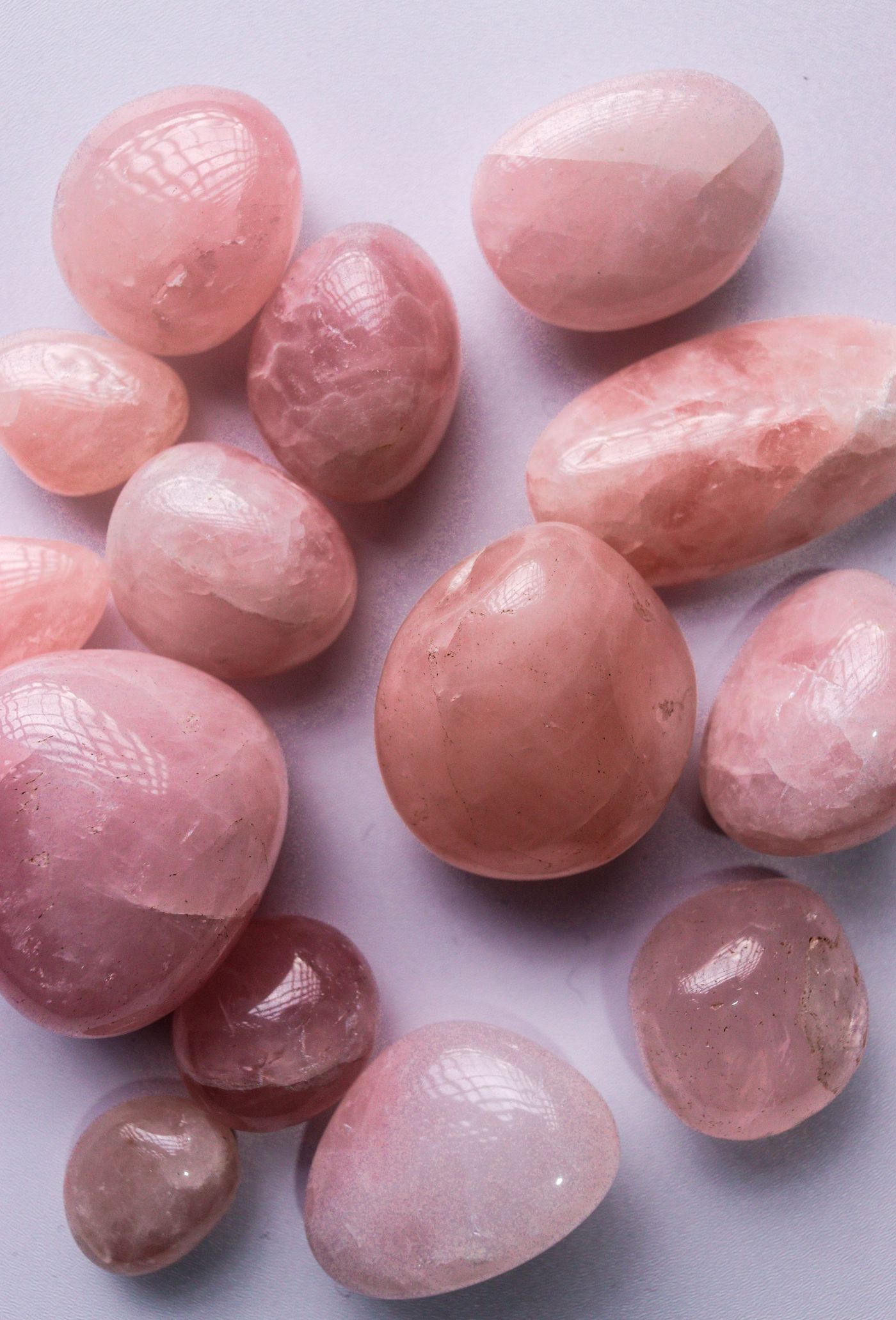
Rose quartz can appear in a wide range of objects: a smooth ring stone, a carved drop, a bracelet of round beads, or a necklace with knots and metal fittings. The material name provides useful context, but it does not describe every component that will meet a cleaning cloth, water, or daily movement. A care routine should begin with the complete object. The same named stone can sit within constructions that have very different practical limitations.
Gather the information supplied with the jewelry and separate it into material, construction, and finish. What is the rose quartz represented to be? How is it held or strung? What metals, coatings, adhesives, or cords are present? If the answers are incomplete, ask the seller or maker before choosing an involved cleaning method. The goal is not an elaborate technical file for every accessory. It is enough clarity to avoid applying a stone-only instruction to parts that require different treatment.
A set stone needs attention to its frame
In a ring or pendant, the setting holds the stone and determines how much of its edge is exposed. A surrounding rim, individual prongs, or another construction creates different areas to inspect. Look at the junction between material and metal under ordinary good light. Notice whether anything has changed since the piece was new to you. Do not try to prove security by pushing the stone or twisting the setting forcefully.
If the stone appears to move, a prong catches clothing, or the frame looks distorted, stop wearing it until it can be assessed. Cleaning is not a repair for an insecure setting. A professional should understand the material and the construction before adjusting it. Bring the original description if available, especially if there is treatment information or an unusual finish. A good maintenance conversation begins with what changed and what the object is, rather than an instruction to tighten everything indiscriminately.
Rings meet a demanding environment
A rose quartz ring is exposed to hand movements, surfaces, products, and occasional knocks. Its suitability depends on the setting, the wearer's activities, and an understanding of the material's limits. Do not reduce durability to one hardness number. Resistance to scratching is different from resistance to impact, and neither guarantees that a setting will remain secure indefinitely. A visually gentle stone still belongs to a physical object that encounters the environment repeatedly.
Remove the ring for activities involving heavy pressure, catching, or unsuitable chemicals. Choose a consistent safe place for it rather than leaving it on a sink edge or in a loose pocket. When putting it back on, notice whether the fit or setting feels different. A change may be ordinary or may need attention, but it is easier to address when recognized early. Frequent wear works best with a repeatable routine rather than occasional aggressive cleaning intended to undo accumulated neglect.
A carved pendant has its own vulnerable areas
Carving introduces changes in thickness, projecting details, and recessed areas. A smooth broad pendant and a finely carved form should not automatically be handled in the same way. Look at thin sections and the suspension area when planning storage. A small projection can become the first point to meet another object in a crowded jewelry box. The pale color may make the form seem soft, but the care question concerns its actual geometry.
Avoid using sharp tools to remove residue from recesses. A persistent mark may need a suitable professional's advice, especially if the carving has a coating, adhesive, or other feature not obvious from the front. Do not attempt to smooth a chipped detail at home. Altering one area can change the form and create additional damage. If repair is needed, discuss whether preserving the original shape or creating a safe wearable result is the priority, because those goals may not always lead to the same intervention.
Drilled pieces depend on the area around the hole
A pendant suspended through a drilled hole concentrates attention on the material and the cord or fitting at that point. Inspect the openings visually without scraping or probing them. A rough or chipped area may affect the suspension, while a worn cord may need replacement even if the stone looks unchanged. Keep the original cord specification when possible. Replacing it with a similar-looking but unsuitable material can change the way the piece hangs or bears contact.
Ask how the pendant is intended to be restrung if the cord wears. A simple front view may conceal a construction that requires a particular knot or fitting. If the piece is personally significant, planning a maintenance route before failure is useful. Do not enlarge the hole casually to accommodate a preferred cord. That is specialized work with consequences for the material and should not be treated as a minor household adjustment.
Bead strands are assemblies of many interfaces
A rose quartz necklace contains repeated contact points: bead to thread, bead to knot, bead to spacer, and strand to clasp. Care involves all of them. Look at the consistency of the arrangement and any visible wear near the ends. A strand that has become unusually loose or whose thread shows fraying should be assessed before continued use. The condition of one hidden component can affect every bead in the necklace.
If a strand breaks, gather the components without rushing and keep them together. A reference photograph can help restore a graduated or asymmetrical arrangement. Do not assume that restringing is merely a matter of replacing thread with the same color. Material, thickness, knotting, tension, and finishing all influence fit and appearance. A professional stringer can discuss the appropriate method and any changes needed to make the piece wearable again.
Elastic bracelets need a limited kind of flexibility
Elastic makes a bracelet convenient to put on, but convenience should not be mistaken for unlimited stretch or permanent condition. Roll the strand gently over the hand rather than pulling one section into a long loop. Avoid catching it while dressing or leaving it stretched around an oversized display support. If the bracelet becomes unusually slack or the knot area changes, set it aside for inspection or restringing.
Do not use soaking as a default way to clean an elastic strand. The maker's instructions should address the assembled bracelet, not only the rose quartz. Water, products, and repeated stretching may affect components differently. A gentle permitted surface wipe may be more appropriate for routine care, while more persistent soil calls for advice. The practical question is how to maintain the whole circle of beads securely, not simply how to make the visible surfaces glossy.
Knots and thread can alter the appearance
In a knotted necklace, the thread is part of the visual rhythm as well as the structure. It may blend with the pale stone or provide a small contrast. Cleaning or restringing can therefore affect appearance as well as security. If the original effect matters, record the thread color, knotting pattern, and finished length. A repair that uses larger knots or a different material may change the spacing enough to alter the necklace's character.
Avoid trying to bleach or recolor thread while it remains assembled with the jewelry. A household treatment aimed at the textile component may affect the stone, metal, or finish. Ask about professional restringing if the thread is stained or worn. Keeping the old construction as a reference can help communicate the desired result. The most appropriate repair may replace a working component rather than attempt to clean it beyond a sensible limit.
Metal finishes require specific instructions
Rose quartz may be paired with polished, plated, brushed, or deliberately darkened metal. These surfaces should not all receive the same treatment. A polishing cloth that removes tarnish can alter an intentional finish or wear a coating. Ask which areas may be polished and how the stone should be protected. A generic instruction to clean silver is insufficient if the piece includes several finishes or components with different requirements.
If residue has collected where metal meets stone, do not scrape into the joint with a sharp object. The mark may be accessible to a professional using an appropriate method, while an improvised tool can scratch the surface or disturb the setting. Describe the problem and provide a clear image if asking remotely. A precise question about one area is more useful than treating the entire object with a strong product in the hope that every surface will improve together.
Gentle cleaning is not the same as universal immersion
GIA's rose quartz guidance recommends warm soapy water for the material and advises against steam and ultrasonic cleaning. That material-level advice still needs to be interpreted through the construction. A stone in a suitable setting may tolerate a method that is inappropriate for a glued component, a cord, or an unfamiliar finish. Ask before immersing a piece when you do not know how it is assembled.
Begin routine care with the least involved permitted method, often a clean soft cloth. Check that the cloth is not carrying grit that could be dragged across the surface. Use light pressure, and stop if a mark does not respond as expected. A residue, a scratch, and an internal feature are different things. Increasing force does not resolve that uncertainty. Appropriate cleaning depends on knowing what you are trying to remove and which components the method will touch.
Avoid an escalating sequence of home remedies
Household products can be appealing because they are familiar and readily available, but familiarity does not establish suitability for jewelry. Toothpaste, abrasive powders, strong detergents, solvents, and metal dips can affect surfaces or components in unintended ways. Combining methods makes it harder to understand what caused a later change. If gentle permitted care is not enough, ask for advice rather than moving through a list of increasingly forceful treatments.
Do not heat, scratch, strike, or chemically test the jewelry to prove the material's identity. Such actions can damage the object and still leave the question unresolved. If identification is important, seek an appropriate professional examination. Care and authentication are different tasks. A successful cleaning result does not prove natural origin, and an unexpected response to a household product does not provide a reliable diagnosis of what the material must be.
Store for separation and support
A pale stone can still be scratched or damaged by unsuitable contact. Store pieces separately from harder or rough objects, and keep chains from wrapping tightly across polished faces. A carved pendant may need support that prevents pressure on projecting details. A bracelet should not be forced into a compartment that stretches it or bends a rigid component. Choose storage according to the object's shape rather than only its category name.
The storage place should fit your habits. A small protected compartment you use consistently may be more effective than an elaborate box that is inconvenient to open. Keep jewelry away from leaking cosmetics or cleaning products and put it away appropriately dry. If a piece is used only occasionally, inspect it before wearing rather than assuming that time in storage guarantees every connection remains ready for use. Storage reduces risks; it does not replace attention to condition.
Recognize changes without overdiagnosing them
A new line, pale mark, change in fit, or rough feeling can have several explanations. Compare the object under good light and, if available, with earlier photographs. Describe what you observe without declaring a cause that has not been established. A reflective surface can make a mark appear or disappear with angle. A photograph may help a maker understand the question, but an in-person assessment may be necessary for condition or security.
If a sharp chip or failing connection is suspected, pause wear. Keep the piece separate and avoid testing the area with a finger or tool. A professional can discuss whether continued use, repair, replacement, or redesign is sensible. The goal is not to make every object look new at any cost. It is to preserve a useful and safe wearable result while respecting the material, construction, and significance of the piece.
Give the next owner useful information
When giving or passing on rose quartz jewelry, include the care details you know. Explain whether the piece uses elastic, thread, a particular finish, or a construction that may need periodic attention. A simple note can be more helpful than a broad promise that the material is durable. If something is uncertain, say so. Accurate information allows the next wearer to ask better questions rather than inherit an unsupported assumption.
Personal meaning can accompany that practical record. You may explain why the color or shape mattered to you without claiming that the stone guarantees love, emotional healing, or a health benefit. The object can carry affection through the act of giving and the history of ownership. Its care remains a concrete matter of materials and construction. Keeping those roles separate makes both the practical instructions and the personal story clearer.
A repeatable routine is the useful outcome
The most effective care plan is one you can carry out consistently: gentle handling, suitable surface care, protected storage, and attention to changes. It should reflect whether the object is a ring, carving, drilled pendant, or strung piece. The shared material name does not erase those differences. Once the construction is understood, the routine often becomes simpler because you stop asking one universal cleaning method to solve every problem.
Rose quartz can remain a quiet and enjoyable part of a jewelry collection when the whole object is respected. Its pale color does not need elaborate treatment, and its symbolic associations do not replace maintenance. Clear information and modest habits support the actual design. You can then enjoy the material's softness of appearance while caring sensibly for the settings, holes, stringing, and finishes that allow it to be worn.
References & further reading
References provide background and further reading. Linked organizations do not endorse or certify this publication.
For general education. The identity, treatments, construction, and condition of an individual object may require professional examination. Our editorial approach.
Back to the beginning