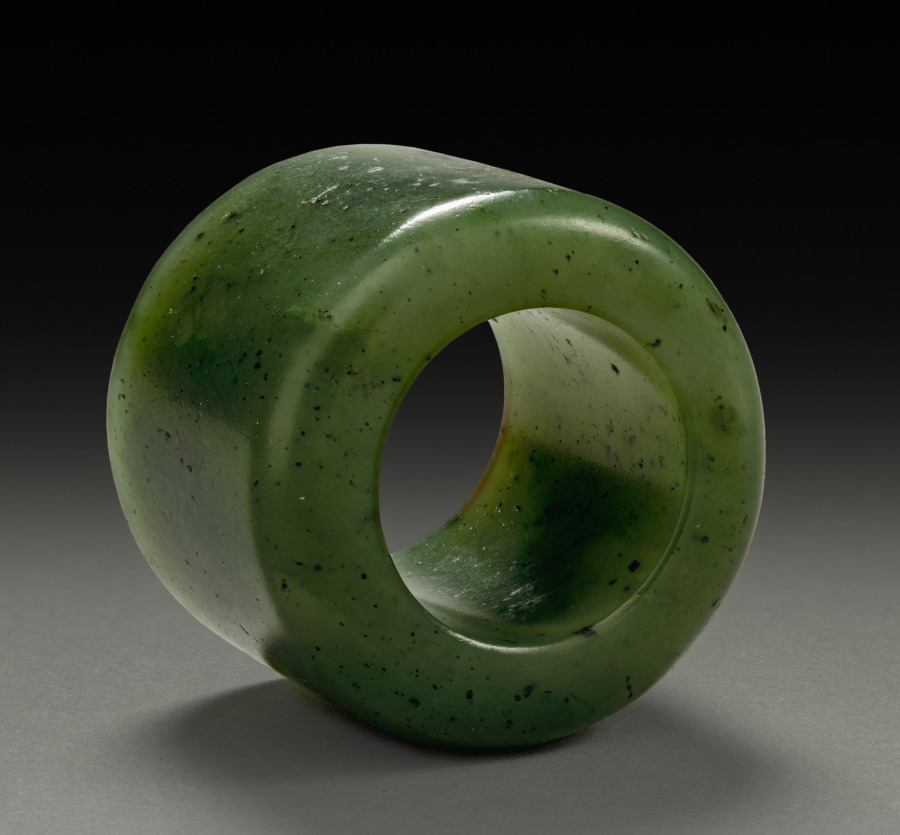
AT A GLANCE
A gemological report is useful when its findings are understood in relation to the specific object examined. This guide walks through document matching, identification language, treatment comments, verification, and the distinction between laboratory findings and seller narratives. It also explains what to ask about strands, mounted jewelry, old reports, appraisals, and the uncertainties that may remain after a report has been read carefully.
Start with the purpose of the document
A report should be read as a record of a particular examination, not as a general badge of quality. Before focusing on an impressive logo, ask who issued the document and what service it represents. A gemological identification report, a shop guarantee, an appraisal, and a sales receipt answer different questions. They can all be useful, but one should not be silently substituted for another simply because each looks official or uses the word certificate.
Write down what you hope the document will establish. Perhaps you need the stated material identity, information about detected treatments, or a description that helps match an inherited piece. Compare that need with the report's actual scope. If the service does not address your question, the document may still be valid while being insufficient for your purpose. This distinction prevents frustration and helps you request the appropriate additional information rather than expecting one report to answer every possible question.
Identify the issuer through independent channels
Use the issuer's official website or independently obtained contact information to understand its services. Avoid relying only on a link supplied in an advertisement, especially if the domain or contact route is unfamiliar. Look for explanations of terminology, report types, and any official checking service. The goal is to understand who is making the statement and how that statement can be verified, not merely whether a document has attractive formatting.
If the issuer is unfamiliar, ask the seller why that service was used and what examination was performed. A clear answer should be specific enough to investigate. Decorative seals, holograms, and laminated cards can be part of a legitimate document, but they do not establish the analytical quality of the examination by themselves. Give more weight to an understandable scope and independently accessible information than to visual features that are easy to admire but difficult to interpret.
Match the document to the actual object
Check the item description, photograph, measurements, weight, and identifying number wherever they are provided. Compare them with the object being offered or held. A report for a pendant should not be assumed to describe a similar-looking pendant from the same seller. Natural-material objects can resemble one another closely enough that a quick glance is insufficient. Use the available details together rather than allowing one broad similarity to carry the entire match.
Be alert to whether measurements include a mounting or only the stone, and whether weight is recorded for a loose material or an assembled piece. Differences may have an explanation, but they should be explained before you rely on the document. If the piece has been altered since examination, ask what changed and whether the report remains an appropriate description. A secure match between report and object is the first practical requirement; interpreting the findings comes after that relationship is clear.
Read material identification literally
The identification field describes the material as determined within the service's scope. Use the issuer's own terminology guide when a term is unfamiliar. Do not expand a specific identification into unrelated claims about origin, age, carving tradition, or value. A material can be correctly identified while the object's earlier ownership remains unknown. Keeping those categories separate makes the report more useful, because you know which part of the seller's narrative it actually supports.
If a listing uses different wording from the report, ask the seller to reconcile the terms in plain language. The difference may be a familiar trade expression, a translation choice, or something more significant. Do not decide solely on which phrase sounds more luxurious. Your task is to understand whether the advertisement and the document describe the same material claim. Save the explanation with the report so that a future reader does not have to reconstruct the conversation.
Treat treatment comments as specific findings
Treatment language should be read carefully, including any qualifications about what was detected or what could be determined. A laboratory's statement has a technical context. Avoid translating it into an unlimited guarantee about every event in the object's history. If you do not understand a phrase, consult the issuer's explanation or ask the issuer directly where that service is available. A seller's short promotional summary can help orient you, but it should not replace the full wording.
This is particularly important when a report and a listing use different levels of certainty. An advertisement may say completely untouched, while the document uses more bounded language. Ask what additional evidence supports the broader claim. Do not assume that a reassuring adjective has analytical significance merely because it appears beside a report number. A careful reader can appreciate the value of laboratory work without asking it to support promises beyond the examination performed.
Separate a color description from a grade
A report may describe color or transparency without assigning the commercial ranking that a seller attaches to those characteristics. Read the field for what it says. A descriptive word can help identify the object and communicate appearance, but it may not correspond to a universal quality grade. Ask the issuer's terminology guide whether the report type includes grading and, if so, which characteristics are actually evaluated.
This distinction keeps visual preference in its proper place. You might like a particular shade even if it is not associated with the most dramatic trade name. Conversely, a prestigious description does not guarantee that the piece will suit your wardrobe or personal taste. The report supplies information within its scope; the decision about whether you enjoy the appearance remains yours. Do not let a descriptive field become a substitute for seeing the object under representative conditions.
Origin is a separate claim
A seller's account of where jade was mined, traded, carved, or acquired can involve several different locations. A report may address some of these questions, or none of them. Look for an explicit finding rather than inferring origin from the material name, a laboratory address, or a culturally associated design. The place where the report was issued is not automatically the place where the material originated.
If geographical origin is central to the purchase, ask what evidence supports that specific claim and whether it is an opinion, a documented chain of custody, a laboratory conclusion, or a commercial description. These are not interchangeable. The answer may remain uncertain. That uncertainty should be reflected in the description rather than filled by a romantic narrative. A piece can be attractive and well documented in other respects even when its mining location has not been established.
Age and authorship require their own evidence
An identification document does not necessarily date a carving or name its maker. Historical attribution can depend on construction, style, inscriptions, provenance, comparison with documented objects, and specialist interpretation. A material finding should not be converted into proof that an object is antique or made by a particular workshop. If an advertisement joins those claims together, ask which document or expert opinion addresses each part.
For a family object, preserve recollections as recollections rather than changing them into laboratory facts. A note that a relative remembered receiving a pendant at a particular time is useful, but it has a different status from an examination result. A good ownership file can contain both. The clarity comes from labeling the source and limits of each statement, not from pretending that all documents are equivalent or that one form of evidence makes the others unnecessary.
Strands and sets need a clear scope
When a report accompanies a bead bracelet, necklace, pair, or set, determine exactly what was examined. The service may concern a complete assembled item, particular components, or a submitted sample. Read the description rather than assuming that a report about one bead automatically establishes the identity and treatment status of every similar bead in a larger arrangement. The same caution applies when a strand has been restrung or components have been replaced.
Ask the seller to explain how the report relates to the piece as currently supplied. Request photographs or item details that make the relationship understandable. A consistent appearance is not enough to answer every component question. If the scope is narrower than your needs, ask a suitable laboratory what additional examination would be appropriate. The purpose is to align your reliance with the actual work performed, not to dismiss a report because it was designed to answer a more limited question.
Mounted jewelry can limit examination
A mounting may obscure parts of a stone or restrict the measurements and observations available. Read any limitations stated in the report and ask for clarification if they affect your decision. Do not assume that a report for a mounted pendant provides the same information as an examination of an unmounted material. Nor should you assume that removing the mounting is always necessary or appropriate. That decision depends on the question, the construction, and the professional service proposed.
If removal or alteration is suggested, discuss the risks, costs, permissions, and effect on return terms before authorizing it. For an older object, the mounting itself may have significance. Preserve photographs of the original arrangement and keep any removed components. A report is part of an object record, not a reason to modify the object without considering the consequences. The most useful process obtains relevant information while respecting the piece's condition and the owner's actual purpose.
Use official verification carefully
Where an issuer provides a report-checking service, enter the identifying information through the official route and compare the returned record with the document. Look at the report number, date, item description, and findings available. A match supports the existence and contents of that record. It does not eliminate the separate task of matching the physical object to the report. Both steps matter, and neither should be skipped because the other feels reassuring.
If information is missing or inconsistent, contact the issuer using independently obtained details rather than guessing at an explanation. There may be administrative or technical reasons for a difference, but you should understand it before relying on the report for a significant transaction. Keep a copy of the verification result or a note of the date and route used. Avoid posting unnecessary personal information or full private transaction details when asking public forums to interpret a document.
Appraisals and reports answer different monetary questions
An identification report may not state a value, and the absence of a value does not make it incomplete for its intended purpose. An appraisal may provide a monetary opinion for a particular purpose and date, but that opinion should not be treated as a guaranteed resale result. Ask what the appraisal is intended for and how its assumptions relate to your decision. A high number printed on a document is not a promise that another buyer will pay that amount.
Keep purchase price, insurance-related figures, replacement opinions, and potential selling expectations distinct. If a monetary decision is important, consult an appropriately qualified professional for the relevant service rather than attempting to derive a price from the material identification alone. Design, condition, documentation, market context, and transaction circumstances can all matter. This guide does not provide investment advice; its purpose is to stop a useful technical document from being asked to answer a different financial question.
Build a file that remains understandable
Store the complete report with the receipt, saved listing, item photographs, material and treatment disclosures, condition notes, and relevant correspondence. Add a short index explaining what each document addresses. If the object is repaired, remounted, or restrung, record the date and the work performed. This file is valuable because the relationship between object and paperwork can become less obvious as years pass and memories fade.
When passing the piece to someone else, include a plain-language summary that distinguishes established findings, seller statements, family recollections, and unresolved questions. Do not simplify the record into a more confident story than the evidence supports. A well-read report can be an excellent foundation for understanding jade, but its strength lies in its boundaries as much as its findings. Read those boundaries carefully, match the document to the object, and let additional claims stand on their own appropriate evidence.
Ask a focused follow-up question
If you need clarification, quote the exact field or sentence that concerns you and explain the decision it affects. A question such as whether a stated measurement includes the mounting is easier to answer than a general request to say whether the entire purchase is good. Keep the response with the report, including who supplied it and when. If the answer comes from the seller rather than the issuer, label it accordingly. This small habit preserves the difference between an explanation of a document and a new claim made during a sale. It also makes a later conversation with a professional more efficient, because the unresolved question is already expressed in specific terms rather than buried in a broad impression of reassurance or doubt.
References & further reading
References provide background and further reading. Linked organizations do not endorse or certify this publication.
For general education. The identity, treatments, construction, and condition of an individual object may require professional examination. Our editorial approach.
Back to the beginning