AT A GLANCE
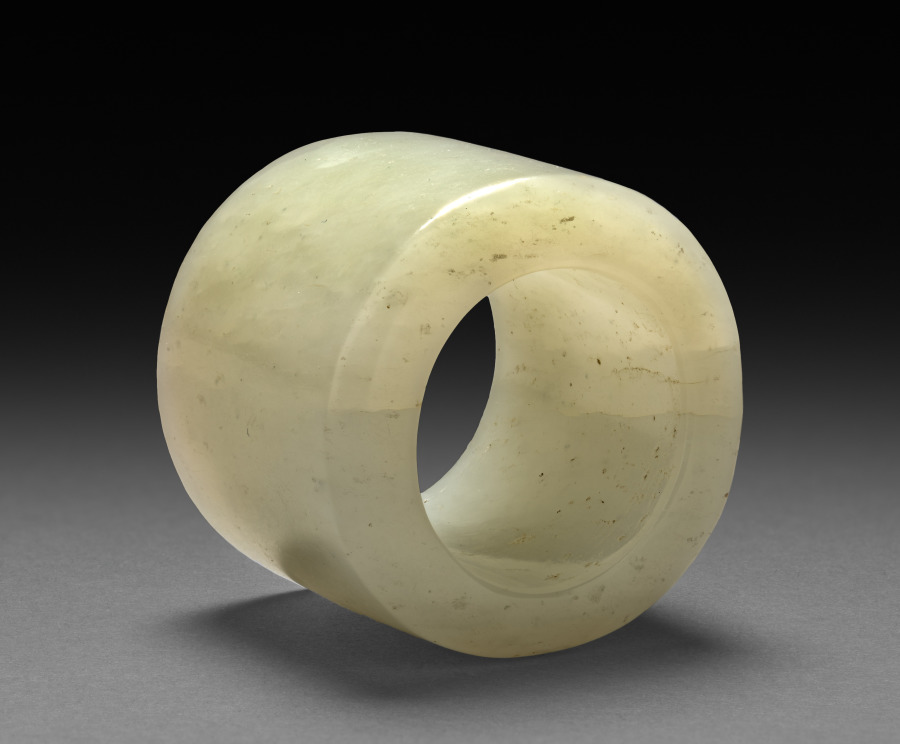
A carved jade piece rewards attention to silhouette, proportion, color placement, open space, and the transition between surfaces. This guide offers a practical way to look at craftsmanship without equating complexity with quality or guessing age from tool marks. It considers front and reverse views, everyday scale, maker explanations, documentation, and the difference between a compelling design and an unsupported story.
Begin with the whole shape
Before enlarging a photograph to inspect tiny details, look at the complete object at an ordinary viewing size. Notice its outline, balance, and the way the main forms relate. A carving can be intricate without having a clear overall composition, while a restrained pendant can communicate a strong idea through a few deliberate curves. Starting with the whole shape helps you avoid mistaking the quantity of visible work for the success of the design.
Try describing the object in a sentence without naming its supposed value. You might see a compact form with a broad quiet center, a lively group of overlapping shapes, or a long pendant organized around an opening. This exercise directs attention to what the carver has made rather than to a sales category. You do not need specialist vocabulary to recognize that one arrangement feels coherent to you and another remains difficult to read at the distance from which it will normally be seen.
Compare detail at the scale of use
A close-up can make a small carving appear monumental. Fine incisions become prominent, and shallow differences in relief can seem much deeper. That view is useful, but it should be paired with a photograph showing actual dimensions and, where appropriate, the piece being worn. A pendant that looks highly legible on a large screen may read mainly as a textured silhouette against clothing. Decide whether that is the effect you want rather than assuming that more magnification always produces a better judgment.
Hold a paper outline of the stated dimensions beside a familiar accessory if you are buying remotely. The outline cannot reproduce the stone, but it can restore a sense of scale. Ask which details remain visible at normal distance and which are intended for close inspection. Both kinds of detail can be enjoyable. A thoughtful design may offer an immediate overall form and a second layer of interest when held, without requiring every feature to announce itself across a room.
Notice how the design uses the material
Carving begins with material that presents its own possibilities and limitations. A buyer usually sees only the finished object, so it is important not to invent a complete account of the maker's decisions. You can nevertheless observe how color, thickness, and visible variation participate in the final design. Does a darker area emphasize a particular form? Does a pale section create a quieter passage? Are changes in the material treated as distractions or integrated into a coherent composition?
These observations do not establish whether the piece is untreated, how rare the rough material was, or how difficult the carving was to execute. They concern the relationship visible in the finished object. If the maker has explained that relationship, keep the explanation attributed to the maker. If no explanation is available, speak about the effect you observe rather than claiming to know the artist's intention. This distinction leaves room for appreciation without turning visual inference into an undocumented production history.
Look at transitions between surfaces
The junction between a rounded form and a flatter area can reveal much about the design's visual control. Look for how one surface leads into another, whether a ridge feels deliberate, and whether a recess appears resolved rather than simply left behind. These are aesthetic observations, not a laboratory test or a universal grading system. A sharp transition may be appropriate in one design and a softer one in another.
Request photographs in light that shows the surface without overwhelming it with reflections. Moving highlights can help reveal contour, while a diffuse view can make the overall shape easier to read. Do not judge every irregularity from a single image; dust, reflections, compression, or focus can create misleading impressions. If a feature matters to your decision, ask about it specifically. A clear question about a particular transition is more useful than a broad demand that the seller prove the carving is excellent.
Examine edges and openings thoughtfully
Edges, drilled holes, and openwork are part of the object rather than secondary details hidden behind the motif. Ask for views that show how they are finished and how the pendant is suspended. Narrow projections and delicate bridges may be visually appealing while requiring more cautious handling. Decide whether that construction suits the intended use. A piece reserved for quiet occasional wear can be approached differently from one expected to accompany a busy daily routine.
Do not test a narrow section by pressing, flexing, or tapping it. Photographs can help you identify questions, but they cannot certify structural soundness. If there is a visible line, chip, or suspected repair near an opening, ask for a condition description and appropriate professional assessment where necessary. Beauty and practical suitability can be considered together. You need not criticize a delicate design simply because it is not the right design for activities involving frequent snagging or hard contact.
Give the reverse equal attention
A carving's back can be smooth, shaped, decorated, recessed, or fitted with additional components. It affects how a pendant rests and what is revealed when the object moves. Request a clear reverse image rather than accepting several similar front views as a complete description. Look at how the back relates to the front: whether the overall volume remains considered, whether the suspension seems balanced, and whether any relevant condition or mounting details are visible.
An undecorated reverse is not automatically unfinished. It may be a deliberate part of the object's function and visual emphasis. The useful question is whether the treatment of the back makes sense for the design and the way it will be handled or worn. Avoid rewarding detail merely because it occupies more surface. A quiet reverse can be entirely appropriate, while unnecessary decoration can make an otherwise comfortable pendant more difficult to wear against the skin or a fine garment.
Distinguish relief from depth of meaning
High relief, shallow relief, incised detail, and open spaces can create different visual experiences. None guarantees a more meaningful or culturally important object. A shallow design may depend on subtle changes in light, while a strongly modeled form may be easier to read from a distance. Compare how these choices serve the particular composition rather than using depth alone as a proxy for quality or significance.
Likewise, a recognizable motif does not automatically explain its complete symbolism. If the design has cultural or religious associations, consult reliable contextual sources and ask how the contemporary maker or seller is using it. The carving can be visually successful even when you do not yet know every association, but uncertainty should remain visible. Avoid attaching health, luck, or protection promises to a motif simply because its imagery has a traditional context. Interpretation and physical effects are different categories of claim.
Ask about process without demanding a performance
It can be interesting to learn how a maker approached a piece, including the sequence from material selection to shaping and finishing. A documented process photograph or a maker's account may add context. Yet a dramatic workshop video does not automatically establish the history of the particular object being offered. Ask whether the images show that piece, a representative method, or a broader account of the workshop's practice.
Do not assume that one visible tool proves handwork in every stage, or that the use of powered equipment eliminates artistic judgment. Design, execution, finishing, and collaboration can be organized in many ways. The appropriate purchasing question is what is being claimed and what supports it. A transparent account can describe a contemporary process without disguising it as an ancient one. You can appreciate craftsmanship more clearly when the explanation is specific rather than built around a vague opposition between authentic hands and impersonal machines.
Tool marks do not date a piece at a glance
Marks on a surface can be relevant to specialist study, but interpreting them requires context, suitable observation, and comparison. A buyer should not assume that a photographed groove proves a particular age or technique. Wear, finishing, repair, and later alteration can complicate what is visible. An appealing old-looking surface is not a substitute for evidence when an advertisement makes a historical claim.
If age or authorship significantly affects the purchase, seek advice from an appropriate specialist and ask how the opinion was reached. Keep qualifications and uncertainty in the record. A contemporary carving can be interesting without an antique attribution, and a historical object may be important for reasons that are not visible in a close-up of its surface. Avoid letting a seller's confident reading of one mark become the entire basis for a broad claim about period, workshop, or provenance.
Separate finish from the underlying design
Polish influences how a surface reflects light, but a bright finish does not automatically improve every carving. Some forms are easiest to read when reflections remain controlled; others use contrast between surfaces to create visual rhythm. Ask whether the appearance shown is the intended finish and whether any areas have been altered or repaired. A product photograph can make a bright reflection look like a smooth contour, so multiple views remain useful.
Do not attempt to improve a carving with household abrasives or an improvised polishing tool. Surface changes can soften detail, alter edges, or complicate future assessment. If a finish concerns you, discuss it with a suitable professional before purchase or intervention. The question may involve cleaning, wear, treatment, or design rather than a simple need for more shine. Looking carefully means resisting the urge to make the object conform to an imagined standard before understanding what you are seeing.
Think about the carving as jewelry
A pendant is not only a small sculpture. Its suspension, weight, reverse shape, and relationship with a chain or cord determine how it behaves on the body. Ask whether it turns, how far it projects, and whether the attachment point accommodates the necklace you intend to use. An intricate composition can lose much of its effect if the pendant consistently hangs at an unintended angle or is uncomfortable against clothing.
Try to see the piece in movement where possible. A short, ordinary wearing demonstration can answer practical questions that a museum-like product arrangement does not. Notice whether narrow projections are likely to catch and whether the scale works with your usual necklines. These observations do not diminish the artistry. They recognize that a wearable object has both visual and functional ambitions, and that the best choice for you is one whose construction allows the design to be enjoyed comfortably.
Compare candidates with consistent questions
Choose a few headings for comparison: overall form, actual scale, use of color, surface transitions, edges, reverse, suspension, condition, and documentation. Apply them to each candidate rather than inventing a different justification for the one whose photograph first attracted you. Leave room for an immediate personal response, but support that response with a complete view of the object. This can reveal that a quieter carving is more satisfying after sustained looking than a busier one that initially seemed more impressive.
Do not turn the exercise into a false numerical grade. The headings help organize attention; they do not calculate an objective ranking or establish a fair price. If one feature remains unclear, mark it as a question. A seller's willingness to provide an appropriate image or explanation can be useful information about the transaction, but it still does not replace independent examination where a significant technical or historical claim is involved. Compare evidence as carefully as appearance.
Preserve the explanation that matters
If you buy a carving, keep the maker's statement, relevant process images, material and treatment disclosure, dimensions, and condition information with the receipt. Attribute each account correctly. A seller's description, an artist's explanation, and a laboratory finding serve different purposes. Keeping them separate prevents a useful story about design from becoming an unintended claim about identity, age, or origin when the piece is later passed to someone else.
Write a short note about what you personally enjoy: perhaps the way an opening balances the outline, the contrast between two surfaces, or the quiet presence of the piece when worn. That note belongs alongside the factual record, not in place of it. Looking at jade carving becomes more rewarding when you can appreciate both the object and the limits of what you know. Detail, complexity, and dramatic stories are optional; attentive observation and accurate language are what make the appreciation durable.
Look again after the story
After reading a maker's account or a seller's description, return to the object without looking at the text. Notice whether the explanation helps you see a relationship that is genuinely present or mainly supplies an atmosphere around the image. A useful account can deepen observation, but the design should not have to be rescued by a narrative unrelated to what is visible. You can appreciate a simple form even when little is known about its production, provided its factual description remains honest.
This second viewing is also a way to preserve your own response. Perhaps you admire a carving's technique but do not want to wear it, or enjoy a modest piece that lacks a dramatic workshop story. Those are legitimate distinctions. The purpose of learning about craftsmanship is to make attention more informed, not to require you to prefer the most elaborate or prestigious example. Let the factual record explain what can be established, let the maker's account explain the maker's intentions where available, and let your own observation determine whether the actual object continues to interest you.
References & further reading
- GIA: The Evolution of Chinese Jade Carving Craftsmanship
- The Metropolitan Museum of Art: Chinese Hardstone Carvings
References provide background and further reading. Linked organizations do not endorse or certify this publication.
For general education. The identity, treatments, construction, and condition of an individual object may require professional examination. Our editorial approach.
Back to the beginning