AT A GLANCE
Silk twill is often chosen for printed squares, but the name does not guarantee one fixed weight or drape. This guide focuses on evaluating a particular twill scarf through folded volume, diagonal surface, border placement, corners, reverse visibility, and garment trials. It explains how to compare two pieces without assuming that a more substantial cloth is automatically the better choice.
Make the choice specific
Silk twill is a useful starting category when you want a scarf with a visible printed design and a fold that can look defined. It is not a promise that every example will behave identically. Yarn, density, finishing, dimensions, and edge construction all contribute to the finished object. The practical task is to evaluate the particular scarf rather than buy the category as an assurance of quality. Begin by describing the arrangement you want it to support.
Perhaps you want a broad band inside a jacket, a triangular panel that shows part of the artwork, or a loose knot with distinct corners. Those goals involve different amounts of visible cloth and folded volume. A scarf can be excellent for one and awkward for another. Asking whether twill is good in the abstract will not resolve that difference. Asking whether this twill square makes a comfortable folded band with your familiar coat gives the comparison a clear purpose.
Observe the diagonal surface without overreading it
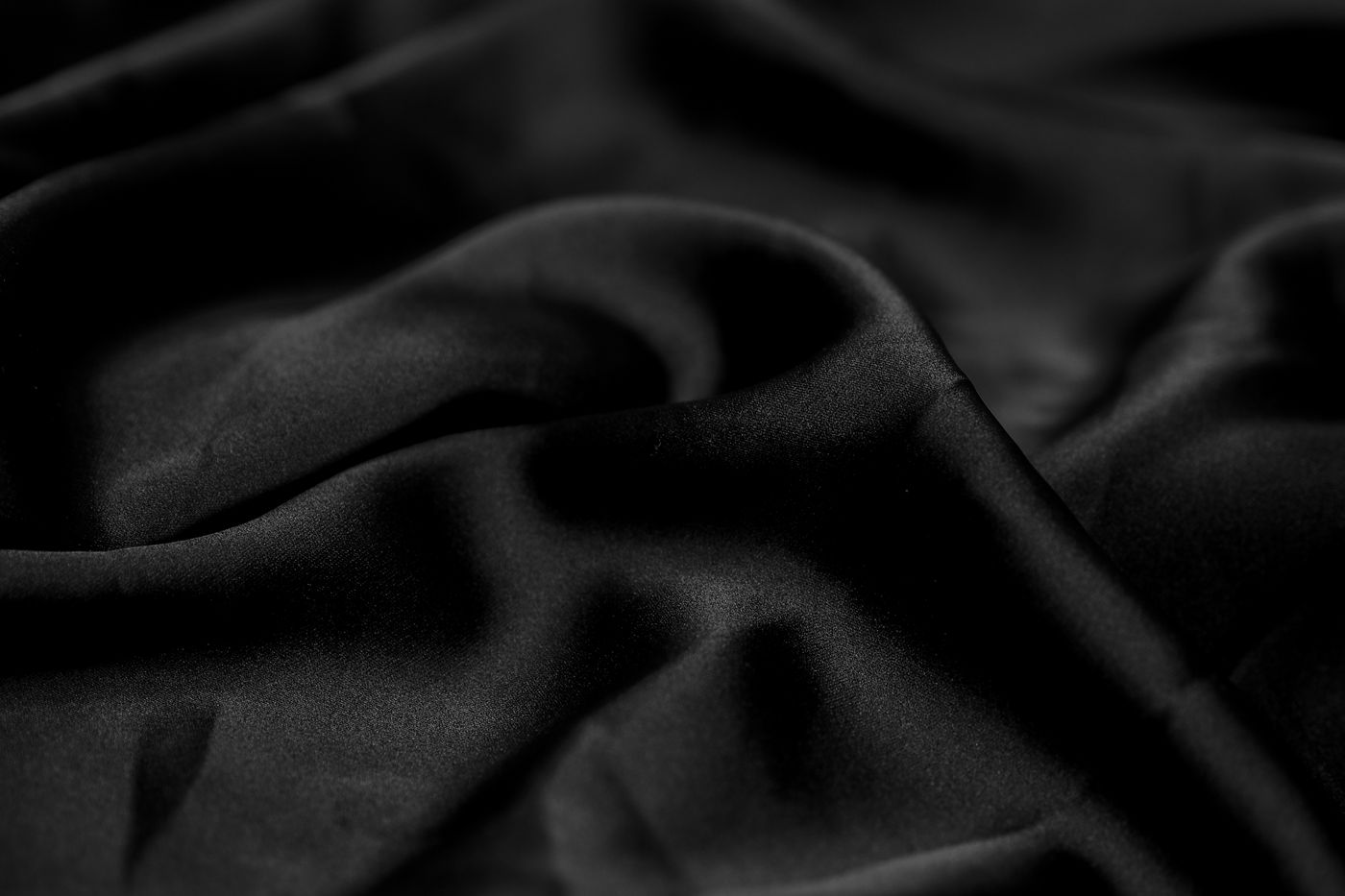
Twill structures commonly create a diagonal progression in the woven surface. The National Park Service explains this relationship between interlacing and visible pattern. In a fine silk scarf, the effect may be subtle and easier to see when light falls across the cloth at an angle. It can add texture beneath a print without becoming a separate decorative motif. Notice it as part of the surface rather than expecting a dramatic ridge visible from across a room.
The diagonal alone does not establish fiber authenticity, origin, or a manufacturing grade. Other fibers can be woven into twill, and photographs may not show the structure clearly. Keep those questions separate. A close image can help you understand texture, while a written fiber statement addresses composition and a maker's documentation may address other claims. Do not ask one visible feature to prove the entire product description. Its value is more modest: it helps explain what you are looking at and what additional information would be useful.
Compare folds at the same width
When evaluating two twill scarves, fold them to a similar finished width if their dimensions allow. This creates a more meaningful comparison than holding one open and another tightly gathered. Observe the thickness of the folded band, the way its edges sit, and how readily it bends around the intended garment. A scarf with more apparent body may create a strong shape, while another may settle more softly. Decide which behavior supports your use rather than assigning a universal winner.
If comparing online, request folded images or a short handling demonstration. Ask the seller to show the scarf resting and then being lifted, rather than only stretched flat. A photograph of an elaborate knot may conceal how much manipulation was needed to produce it. You want evidence of ordinary behavior. A simple folded band displayed without hidden supports can be more informative than a dramatic styling image that reveals little about the textile's volume or willingness to move.
Account for the size of the square
A larger square puts more cloth into a folded arrangement. Even a relatively light twill can become substantial when folded repeatedly into a narrow band. Conversely, a smaller square may feel compact while leaving insufficient length for the arrangement you want. Read the dimensions before interpreting the apparent thickness. A comparison between scarves of very different sizes can otherwise confuse fabric behavior with the amount of material being gathered.
Use the dimensions to imagine the actual fold. Where will the corners end? How much of the band will sit beneath the collar? Will the fastening occupy the same space as a shirt opening or pendant? These questions help identify whether a size is appropriate before the cloth is forced into place. If the arrangement feels crowded, consider a broader fold or a different square. Pulling a knot tighter does not remove the amount of fabric inside it and can make the result less comfortable.
Read the border as a working design element
Printed twill squares often contain borders that become prominent when folded. Examine the border's width, contrast, and relationship to the center. A dark edge can define a pale scarf against a light garment, while a subtle border can let the textile blend into the outfit. The border may become the main visible design in a band arrangement, so it deserves as much attention as the central artwork. A beautiful center that remains hidden is not necessarily a problem if the visible edge gives the result you want.
Try different starting corners and notice whether the palette changes. Some designs offer distinct color relationships in different areas. One fold may expose a quiet section suitable for detailed jewelry; another may produce a lively accent against a plain jacket. This is practical design flexibility. It does not require showing the complete image or using every possible arrangement. Choose the visible relationship that suits your wardrobe and let the rest of the print remain part of the textile's larger composition.
Check how the reverse appears
A folded scarf can reveal its reverse at corners, curves, and loose ends. Ask to see both sides of the actual piece. The reverse may have a different intensity or appearance from the face, depending on the printing and construction. That difference is not automatically a defect. It becomes a practical question when the arrangement you want repeatedly exposes an area that looks unlike what the product photographs led you to expect.
Place the scarf in the intended fold and let it move naturally. Do not keep turning every corner to present the same face if the textile will not remain that way during wear. Decide whether the changing view is pleasing. A softer reverse can create subtle variation, while a strong difference may feel distracting in a particular outfit. The judgment is personal, but it should be based on the actual behavior of the scarf rather than an assumption that a perfectly staged front view represents every moment of use.
Look at print detail at a useful distance
A close photograph can make fine print details compelling, yet a scarf is usually seen at conversational distance and in partial views. Step back and notice the broad shapes. Does the design remain clear, merge into a textured field, or become visually busy? Twill's surface can contribute to the effect, but the scale and contrast of the print may matter more than the weave. Evaluate the result in relation to the garment rather than judging a tiny detail in isolation.
If a motif is important to the purchase, determine whether it appears in your preferred arrangement. A central image can disappear inside a band, while a corner becomes dominant. You may still choose the scarf for its colors, but it is better to know that before buying. A design that looks complex when flat may become beautifully restrained when folded. Another may lose the feature that attracted you. Neither outcome can be predicted from the fabric name alone; the composition has to be considered as part of the choice.
Let the hem participate in the assessment
The edge can influence how a twill scarf's corners and folds sit. Examine it for secure stitching, appropriate tension, and neatly resolved transitions. A rolled hem can add a rounded boundary, while another finish may create a flatter edge. Evaluate the chosen construction in relation to the cloth. A process claim such as hand finished is useful when clearly explained, but it does not replace inspection of the actual perimeter or establish every other aspect of the scarf's manufacture.
Pay attention to localized pulling or an area that appears to be opening. Ask whether the feature is part of the intended construction, a repair, or a condition issue. Do not stretch the edge to test it. When buying online, request clear photographs and rely on return terms if the available views cannot answer a material concern. A secure edge supports enjoyable handling; an attractive story about craft should not make a visible functional problem irrelevant.
Compare twill with another cloth through use
If you are deciding between twill and satin or a lighter plain woven scarf, compare the same intended role. Which produces the folded volume you enjoy? Which places the visible print where you want it? Which feels comfortable with the garment? Avoid reducing the decision to a hierarchy in which one weave is always more refined. Different structures and finishes can support different effects. Your preference may change between a compact collar accent and a broad evening drape.
Use a fair trial. Keep the garment, approximate fold, and lighting consistent while changing the scarf. Note what changes: surface reflection, corner behavior, bulk, or ease of adjustment. This makes the choice easier to explain and repeat. A vague impression that one piece feels more luxurious may be real to you, but a specific observation is more useful when comparing another product later. You are building a practical understanding of textile behavior rather than memorizing a ranking of weave names.
Test movement with the full outfit
Put on the shirt, jacket, and outerwear that are most likely to accompany the scarf. Add the bag and jewelry if they are part of the plan. Sit, turn your head, and move your shoulders naturally. A defined fold can look appealing while still being too bulky beneath a particular collar. A corner may catch beneath a strap or conceal a pendant. These are relationship problems between objects, not proof that the scarf itself is poorly made.
Change one element at a time. Widen the band, shift the visible corner, remove a competing necklace, or try a different neckline. If the scarf then works comfortably, you have identified a useful arrangement. If it continues to demand force or constant correction, consider another use for it. A twill square does not need to perform every styling method to be valuable. Its best role may be specific, and understanding that role can make it more likely to be worn often.
Ask concise purchasing questions
A useful inquiry can cover the stated fiber content, dimensions, available fabric information, edge construction, reverse appearance, and care guidance. Ask for missing photographs rather than a general assurance that the scarf is premium. If a listing mentions weight, confirm what the number describes before comparing it with another product. A total scarf weight and a fabric weight are not the same kind of statement. Clear questions help prevent unlike measurements from becoming a misleading quality comparison.
Consider return conditions as part of the evaluation, especially when touch and folded volume matter to you. Preserve labels and avoid wearing or altering the scarf beyond the seller's permitted trial. When it arrives, compare the actual object with the description under ordinary lighting. A careful trial is not an attempt to find microscopic faults. It is a way to determine whether the textile supports the practical role that led you to choose it and whether the material statements match what was supplied.
Care for the finished scarf
Follow the maker's instructions for the actual printed twill, including any limits related to moisture, heat, or professional cleaning. The weave name does not establish how a particular print or finish should be treated. Preserve the guidance with the purchase record and clarify contradictions before attempting care. Avoid assuming that a method used successfully on another silk scarf will be appropriate here. Similar structure can coexist with different colorants, finishing choices, and histories of wear.
Store the scarf gently after undoing its arrangement and checking condition. Keep it separate from jewelry and rough hardware. If a hem opens or a thread catches, seek suitable advice rather than applying glue, trimming, or aggressive pressing. These ordinary habits support the defined folds and clear design that may have attracted you to twill in the first place. Good care does not promise an unchanged textile forever, but it reduces avoidable damage and makes future questions easier to answer with accurate information.
Choose a particular behavior, not a reputation
The most satisfying twill scarf is one whose dimensions, surface, print, and construction work together for your wardrobe. You can explain what it does: forms a comfortable broad band, shows a useful border, or holds a pleasing triangular panel. That understanding is more durable than a reputation that twill is always the correct choice. Another scarf may serve another role better, and that does not diminish the first piece. It clarifies the reason each belongs in use.
Let the category guide your questions and the object answer them. Observe the diagonal surface, compare folded volume, check the reverse, and test movement with real clothes. Keep claims about fiber, craft, and origin separate unless each is documented. The result is a considered choice grounded in what the scarf can actually do. A defined fold then becomes more than a styled image: it is a comfortable, repeatable arrangement supported by a textile whose particular character you have taken time to understand.
References & further reading
References provide background and further reading. Linked organizations do not endorse or certify this publication.
For general education. The identity, treatments, construction, and condition of an individual object may require professional examination. Our editorial approach.
Back to the beginning